
SWS Academic Research eLibraryEarth & Planetary Sciences

Browse

Search Results

Now showing 1 - 5 of 5

Author publications

Dr.

5 linked publication records

Author: Dr.Year: 2020Subject: Space Technologies and Planetary Scienceclear all
Showing 1-5 of 5 records
1
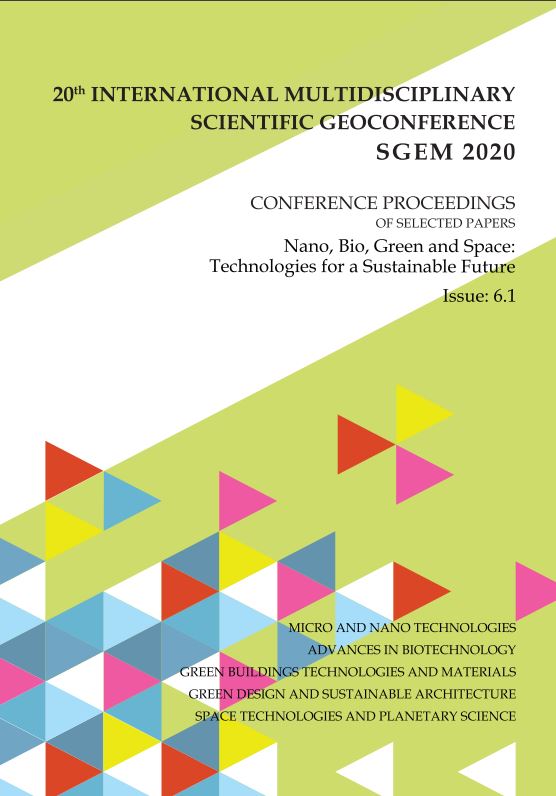
SGEM International Multidisciplinary Scientific GeoConference EXPO Proceedings; 20th International Multidisciplinary Scientific GeoConference Proceedings SGEM 2020, Nano, Bio, Green and Space: Technologies for Sustainable Future
Publication

PARAMETERS OF NUMERICAL AND ANALYTICAL EPHEMERIDES OF THE MOON USE COMPLEX SYSTEMS ANALYSIS METHODS

(STEF92 Technology, 2020-09-20, Arthur Zagidullin, V. S. Usanin, Natalia Petrova, Yury Nefedyev, Alexey Andreev)

Show more

This work considers the study of libration dynamics of the planets? moons. To analysis such processes, it is necessary to use methods for investigating complex systems, as an influence from neighboring celestial bodies on spin-orbital motion of a moon should be taken into account. This fully applies to the Moon?s rotation about its axis. The construction of modern theories of the physical libration of the Moon (PLM) is based on gravimetric, seismic, satellite observations, and lunar laser ranging, which in its tur...

Space Technologies and Planetary Science2020
SGEM International Multidisciplinary Scientific GeoConference EXPO Proceedings; 20th International Multidisciplinary Scientific GeoConference Proceedings SGEM 2020, Nano, Bio, Green and Space: Technologies for Sustainable Future
Publication

STUDY ABOUT AUTO-REGRESSIVE INTEGRATED MOVING AVERAGE (ARIMA) MODEL USED FOR FORECAST OF STRONG GEOMAGNETIC DISTURBANCES

(STEF92 Technology, 2020-09-20, Laurențiu Asimopolos, Natalia-Silvia Asimopolos, Adrian-Aristide Asimopolos)

Show more

The Auto-Regressive Integrated Moving Average (ARIMA) model is widely used to forecast non-stationary time series data. In a model of ARIMA (p, d, q), AR is autoregressive, p is the number of regression terms, MA is the moving average, q is the number of moving average terms, and d is the difference time to make the data a stationary series. It can be used to forecast the trend of geomagnetic disturbances. Firstly, the non-stationary historical data xt is processed by the d difference to develop the stable histori...

Space Technologies and Planetary Science2020
SGEM International Multidisciplinary Scientific GeoConference EXPO Proceedings; 20th International Multidisciplinary Scientific GeoConference Proceedings SGEM 2020, Nano, Bio, Green and Space: Technologies for Sustainable Future
Publication

STUDY OF NEAR EARTH OBJECTS

(STEF92 Technology, 2020-09-20, Maria Sergienko, M. G. Sokolova, Alexey Andreev, Yury Nefedyev)

Show more

In this work, the physical parameters of near Earth objects (NEO) are studied. The search for parent bodies of low-activity small meteor showers ? k-Cygnids, ?-Cancrids, and Virginids are performed among asteroids that could be faded comets. For k-Cygnids by all the catalogues of meteor orbits 2 asteroids are selected ? 153311 2001MG1, 385343 2002LV, whose orbits provide from 90% to 100% compliance with meteoroids? orbits of a shower. The 2012LL9 is only selected by 3 catalogues of meteor orbits. By catalogue of A...

Space Technologies and Planetary Science2020
SGEM International Multidisciplinary Scientific GeoConference EXPO Proceedings; 20th International Multidisciplinary Scientific GeoConference Proceedings SGEM 2020, Nano, Bio, Green and Space: Technologies for Sustainable Future
Publication

THE DEVELOPMENT OF A SELENOCENTRIC SATELLITE SIMULATION NAVIGATION SYSTEM BY MEANS OF THE LUNAR SURFACE MODEL

(STEF92 Technology, 2020-09-20, Alexey Andreev, Natalya Demina, R. Hudec, L. A. Nefediev, Yury Nefedyev)

Show more

This work focuses on the creation of a selenocentric satellite simulation navigation system (SSSNS) using a set of reference objects on the lunar surface. The latter is based on the data from the modern space missions ?LRO?, ?Clementine?, ?GRAIL? (all ? NASA, USA), ?SELENE? (JAXA, Japan), and ?SMART-1? (European Space Agency). The SSSNS was created to transform measurements taken from in-orbit satellite into the selenocentric inertial reference system. The measurements should be taken by on-board altimeter and las...

Space Technologies and Planetary Science2020
SGEM International Multidisciplinary Scientific GeoConference EXPO Proceedings; 20th International Multidisciplinary Scientific GeoConference Proceedings SGEM 2020, Nano, Bio, Green and Space: Technologies for Sustainable Future
Publication

THE USE OF VECTOR INTERPRETATION OF PROJECTIVE GEOMETRY INVARIANTS FOR ANALYZING DYNAMIC SPATIAL IMAGES

(STEF92 Technology, 2020-09-20, Yury Nefedyev, Alexey Andreev, R. Hudec, Viktor Borovskikh, Zoya Andreeva)

Show more

This work focuses on the use of projective geometry methods to determine star positions produced on the basis of positional observations. As is known, projective geometry studies invariant projective transformations. The main feature of projective geometry is the principle of duality, which adds elegant symmetry to many designs. While the properties of the figures that Euclidean geometry deals with are metric, but there are figures that can be converted into one another by movement while maintaining the metric pro...

Space Technologies and Planetary Science2020
Showing 1-5 of 5 records
1